


Meeting new people means answering the same questions every time. What you do for work, what area of town you live in, if you have kids, etc.
Are you married?
I’m used to answering without thinking. Now I can’t.

Every answer requires a calculation: who’s asking, what room I’m in, what they actually want to know. Do I give a simple answer or a more accurate one?
Who exactly is Elloa to me? Wife doesn’t entirely fit. Best friend undersells it by about twenty years and everything that is important to me. Ex-wife is not legally true nor emotionally. I find myself often having to go back eventually and tell the story. There is a moment in a casual meeting where you go a little further, and then I have to back up.
Say I meet a guy at a bar. Probably just a quick chat. It’s a gay bar, so being gay is already basically covered. I might say I have a partner. They are assumed to be a man. I’m cool with this because this is a casual meeting—who cares about details if I’m probably not seeing them again. But, if we talk for long enough, we eventually land at something akin to those scroll-stopping posts on instagram. Our conversation is picture after picture that makes sense and paints a life, then you see one that makes you stop. Look. Judge. Hopefully “like.”
That’s this moment. It’s almost always my kids. They come up. And were they adopted or biological. Who was the surrogate. And then it’s storytime.

I’ve started noticing how much I take for granted that English already has a word for whatever I’m going to need. It doesn’t. Swedish has a word — sambo — for someone you live with and build a life with and aren’t married to. It’s not a slang term; it’s on tax forms. If this is your situation, your neighbor will understand it immediately.
Japanese has the emotion “amae” — the comfort of being able to depend on someone without asking. To lean into love and assume you will not be rejected. That gets closer.
Life-partner. Other-half. Companion. Co-parent. My Person. Soul Mate. Anchor. Domestic partner. Cohabitant. Former spouse. Nesting Partner. Platonic life partner. Chosen family. — “We’re close. It’s complicated. She’s family. My kids’ mom. Someone I love.”
All a version of true. But just a version. Not actually true.
That’s not an accident of vocabulary, it’s just what vocabulary is. A language builds words for the things its culture expects to happen. It doesn’t build words for the things it didn’t plan for. And then people whose lives don’t match the plan find a linguistic hole exactly where they put the most important things about their little unique life.
I wrote a week ago about how labels can replace curiosity. This may seem like a contradiction, but here is what I think is the difference: the over-categorizing closes curiosity. Under-categorizing—having no word at all—makes a person invisible.
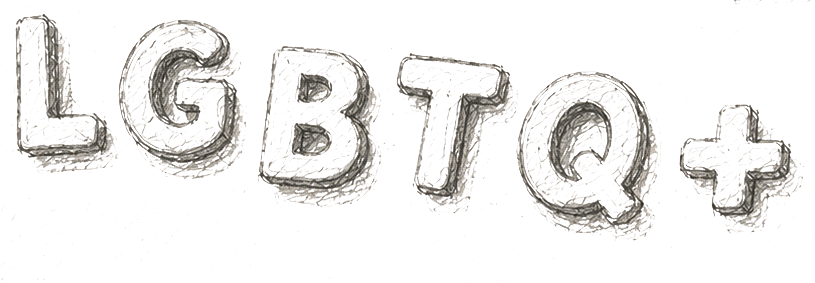
This is what I think is actually going on with the “all the letters”—the L-G-B-T-Q-I-A-plus.
The hostile version is familiar: ever-expanding proof of confusion, the woke mind virus, identity politics without a floor.
But there’s a more serious argument, made not by conservatives but by gay writers like Andrew Sullivan or Matthew Vines, that the original LGB movement was coherent precisely because it was about one thing: same-sex attraction. Who you love. Adding gender identity, then nonbinary identity, then a plus sign that could mean almost anything, didn’t clarify—it complicated. It handed critics a target they could actually hit. That argument isn’t coming from people who hate gay people. Some of it is coming from gay people who think the movement lost the thread. I don’t agree with the conclusion.
The list isn’t growing because reality is getting more complicated. It’s growing because language is finally doing the work of catching up to a complexity that was always there — just unnamed, unaccommodated, and quietly absent. Nobody invented these people. They fought enough for visibility that others finally started building words for them.
Speaking from my own life, not having a word costs something. Every time.
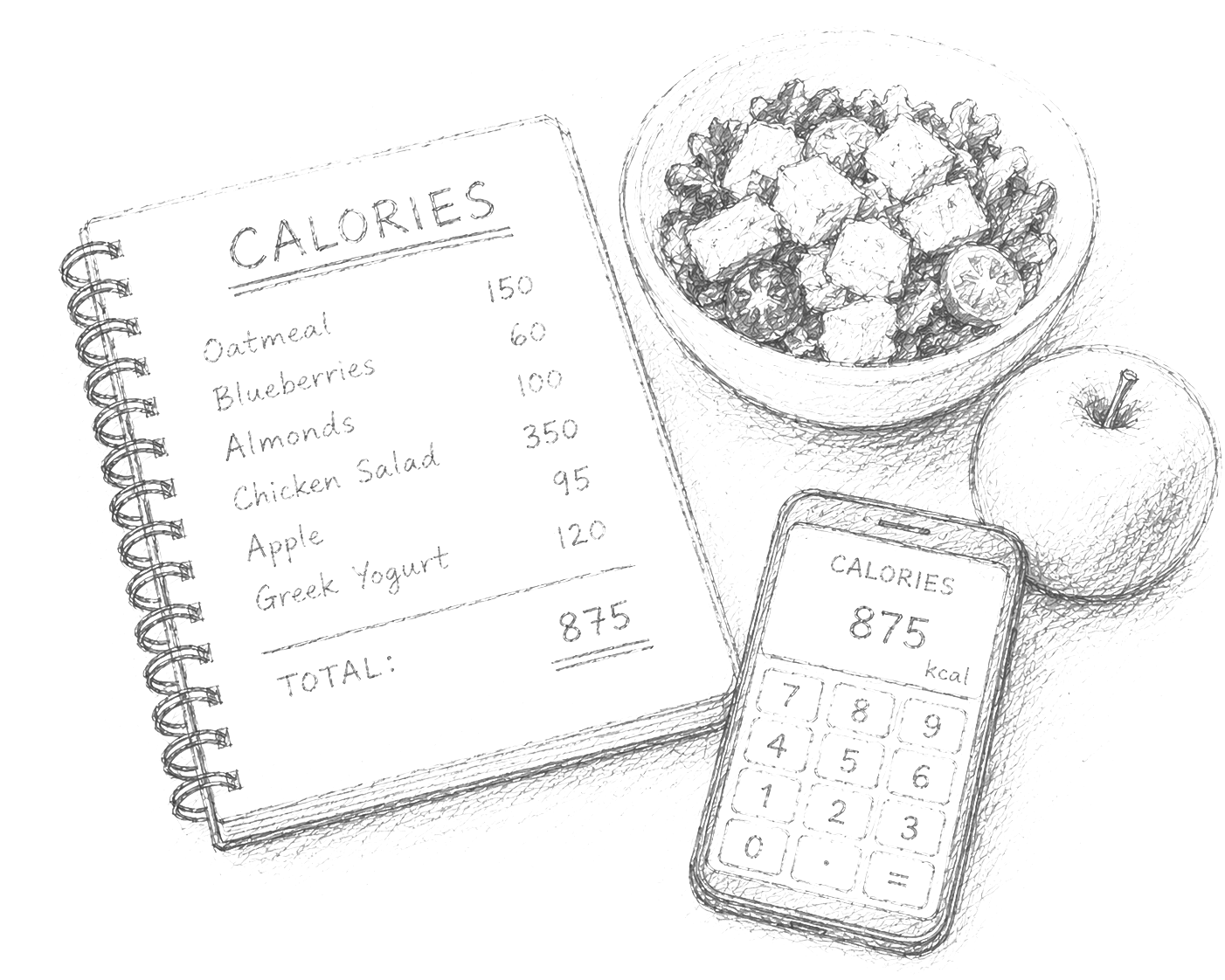
There’s a line from Donald Miller. He’s talking about marketing and says that people’s brains burn calories trying to process anything that doesn’t fit a category they already have. If your message takes too many calories to understand, people check out. They’re not trying to be cruel. They’re just conserving energy, the way brains are built to.
Being hard to explain has a price, and the price gets paid in relationship. Every person I meet has to decide whether they’re willing to burn the calories to understand what Elloa and I are, or whether they’d rather I just say “it’s complicated” and let them file me under Doesn’t Fully Make Sense, Move On. It stings, watching someone pull back a little after you explain your life to them.
And then every so often, someone doesn’t glaze over. Someone sits with the complicated answer and asks a follow-up question instead of changing the subject. 90% of the time, this person has a thing they struggle to explain too. Which is why queer spaces are so wonderful for queer people. I’ve never had a queer person pull back from my explanation. At least not yet.
That willingness—to spend calories on someone whose life doesn’t come pre-labeled—is one of the most healing things I’ve ever received. You reading this counts.
Elloa and I have built our own shorthand.
We give each other grace for which imperfect word gets used in which room. Sometimes I’ll use a word in front of new neighbors that neither of us would choose in private, because it buys us thirty seconds instead of ten minutes, and ten minutes is not always available. She knows. I know she knows.
My kids don’t need any of this. That’s the part that gets me emotional. They know I’m their dad. They know Elloa is their mom. They know we love each other and always have and always will, and they know we’re connected by something that doesn’t have a tidy name, and none of that costs them a single calorie.
It’s just their family.

I’ve watched them explain us to a new friend with more ease than I’ve ever managed with an adult, because they’ve never once needed the dictionary to catch up before they could love us right.
I don’t have a word for what we are. I’ve made an uneasy peace with not having one. What I notice now, more than the absence, is who’s willing to sit inside it with me. Knowing a person shouldn’t cost something, but it does. And the people willing to pay it are the ones worth keeping close.